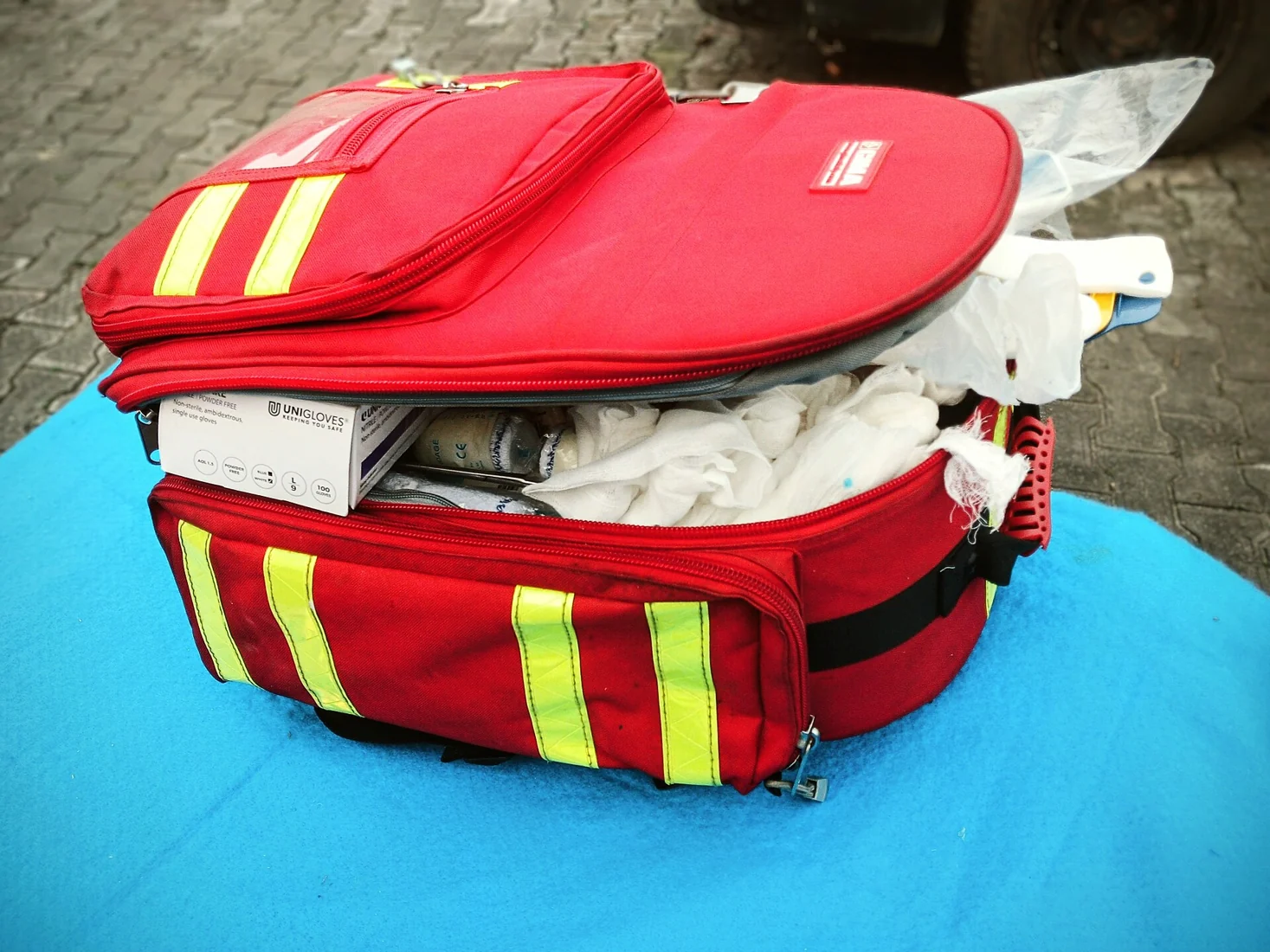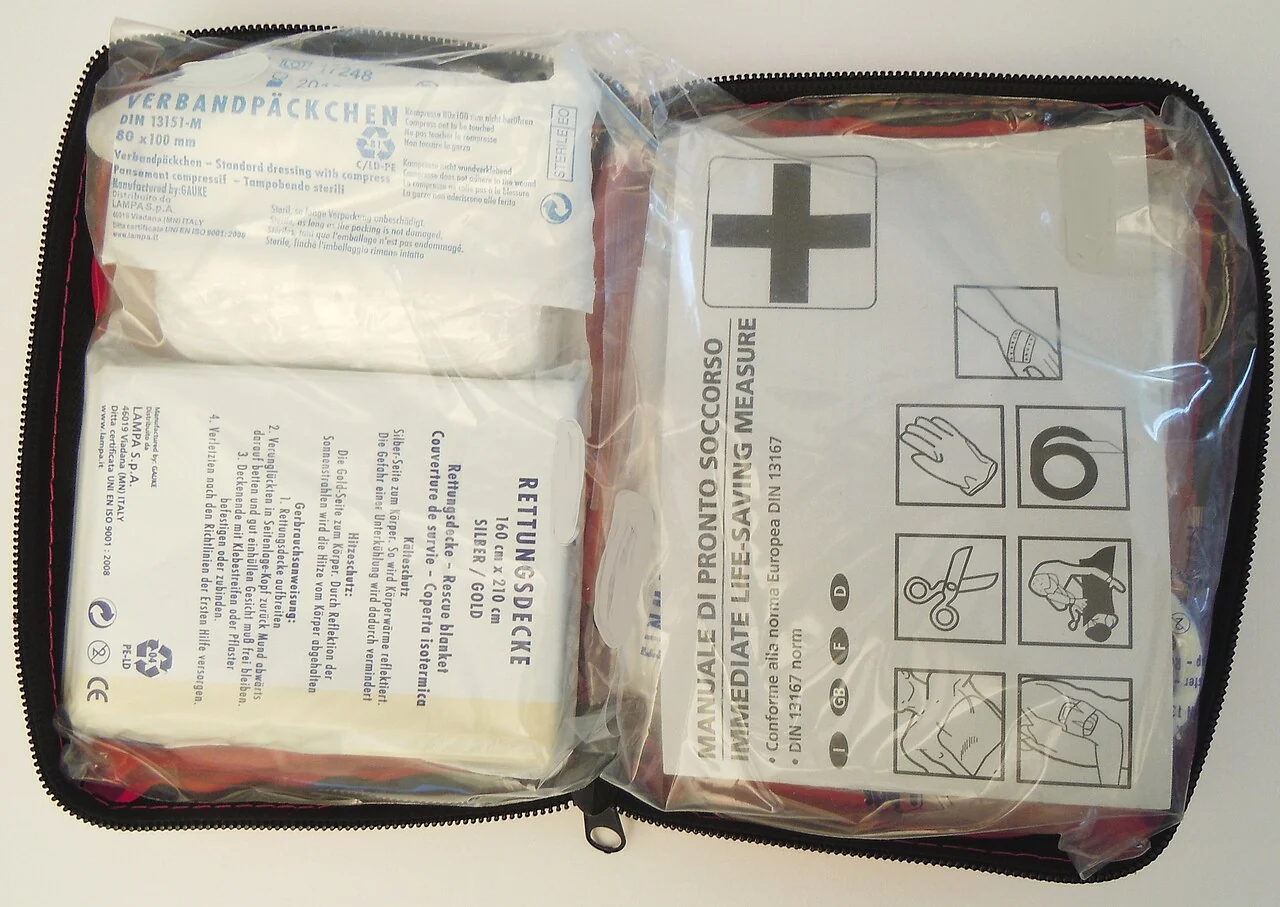
A first-aid kit advertised as containing 100 items may be mostly plasters. Before buying, look at the contents and ask whether they cover the minor injuries you expect to deal with. You should know what each item is for and when the situation needs professional help.
Choose a clearly marked box or bag that opens easily. Keep it where responsible adults can reach it, while storing medicines, sharp items and other hazards safely away from children.
Check the everyday contents
Useful basic supplies can include:
- Assorted plasters for small cuts and grazes.
- Sterile dressings and suitable bandages for covering or securing a dressing.
- Medical tape and suitable disposable gloves.
- A digital thermometer with its instructions.
- Tweezers and appropriate eyewash, where relevant to the kit.
NHS guidance includes these sorts of supplies. Ask a pharmacist if you are unsure which products suit your household. Keep packaging that identifies what an item is and how it should be used.
The purpose of this list is to organise supplies, not teach a medical procedure. Training is particularly important for injuries more serious than the small problems you normally manage at home.
Make the kit easy to search
Separate dressings from other items, and put the things most often used where you can see them. If several people use the kit, keep the arrangement consistent.
Check expiry dates, sterile seals and damage. Replace used items promptly, including the ordinary plaster taken for a kitchen cut. A bag that still feels full can be missing the one item you reach for most.
Keep a torch nearby if the kit would otherwise be difficult to search during a power cut. Check that someone else can find and open it without your help.
Keep medicine information separate and accurate
A written medicine and allergy list can help when seeking advice. Include the name, strength and prescribed instructions, and keep it current with the person concerned. Treat the information as private.
Do not transfer unidentified tablets into the first-aid box or treat someone else’s prescription as a shared household resource. A pharmacist can help you choose appropriate non-prescription supplies and explain storage and suitability.
For repeat medicines, use the separate essential-supplies guide to check ordering and outage arrangements. A general first-aid kit cannot replace a person’s regular treatment.
Know where to get help
Call 999 for a life-threatening emergency. For urgent advice that is not a 999 emergency, use the appropriate service for the part of the UK you are in: NHS 111 in England, NHS 24 on 111 in Scotland or NHS 111 Wales. In Northern Ireland, record the local GP out-of-hours and Health and Social Care arrangements.
Keep the usual pharmacy and GP numbers available. Check local opening hours before a bank holiday if you rely on them. Do not assume an England-only online service will cover a trip elsewhere in the UK.
Consider a recognised first-aid course, then review the kit against what you have been taught. Keep the course materials with the supplies and replace items after you use them.
Sources
NHS Black Country ICB: first-aid supplies
NHS: urgent advice through 111