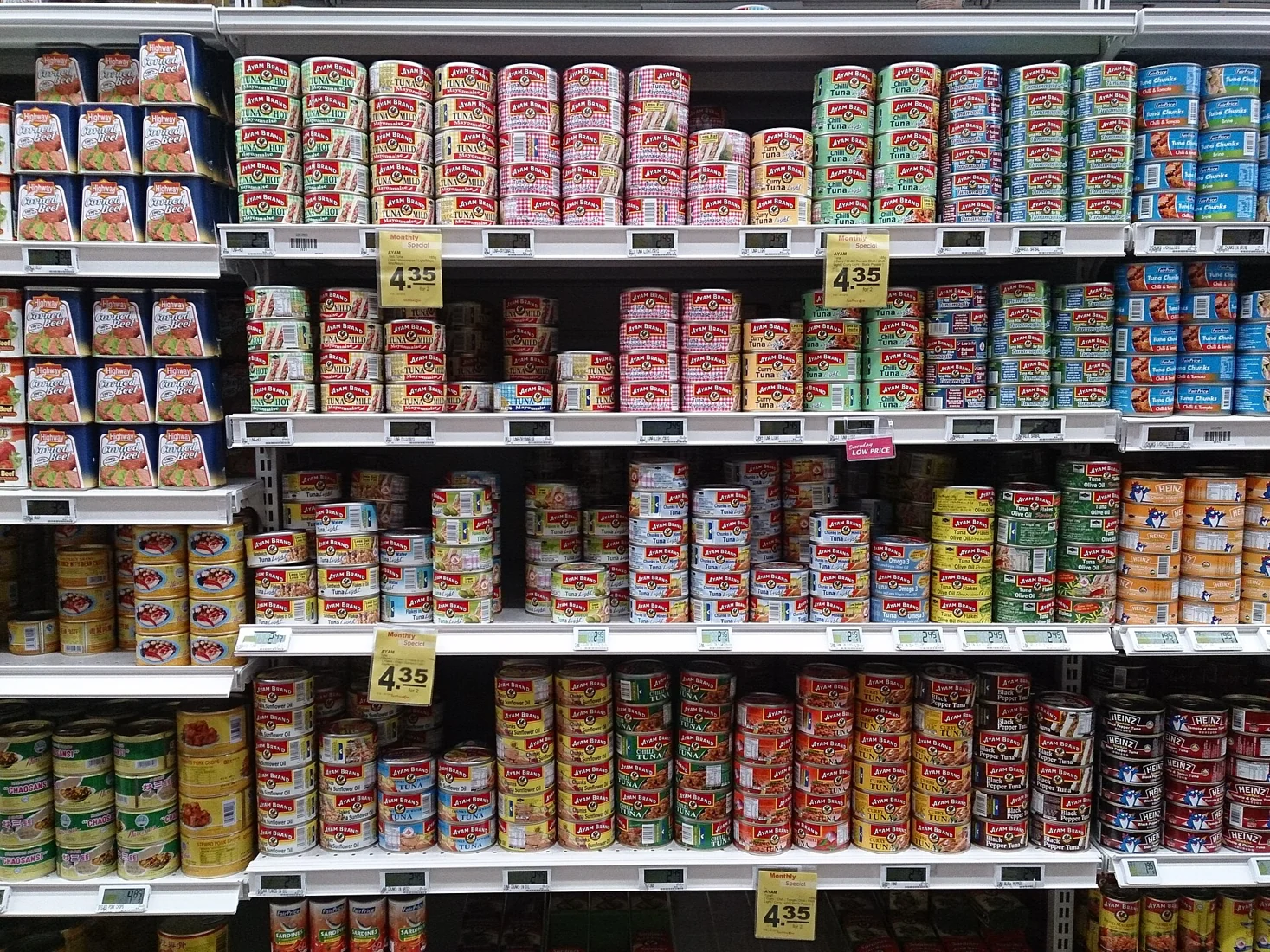
The easiest emergency food to look after is food that already passes through your kitchen. If you normally use a tin of chickpeas each week, keeping a few extra tins is straightforward. A box of unfamiliar rations needs a separate reason to buy it and a separate plan to use it.
Choose one shelf or clearly marked area for the reserve. You should be able to see what is there without unloading a cupboard. A complicated inventory is rarely necessary for a small household stock.
Put the next item to use at the front
When you shop, place newer items behind existing stock. Check dates rather than assuming every new purchase lasts longer: a reduced item or a different batch may need using sooner.
For ingredients you buy regularly, write a minimum quantity on a simple list. If the reserve is four tins and you use one, put one on the shopping list. This makes replacement an ordinary task rather than an occasional large expense.
For less familiar foods, write down the meal you intend to make with them. A tin without a use in your menu is more likely to remain at the back until you clear the cupboard.
Understand the two main date labels
A use-by date concerns safety. Do not rely on smell or appearance to decide that food past a use-by date is safe. Follow the storage instructions as well: the date assumes the product has been stored correctly.
A best-before date concerns quality. Passing it does not automatically mean a product becomes unsafe, but its condition and storage still matter. Do not treat damaged packaging or visibly spoiled food as acceptable simply because the date is a best-before date.
Opening the pack can introduce another limit. Instructions such as “refrigerate after opening” or “use within three days” do not disappear because the unopened product had a long shelf life. Mark the opening date when that helps you keep track.
Check the parts that are easy to miss
Look beyond tins and packets. Check the tin opener works, that a stored ingredient has the other ingredients it needs, and that supplies for a person with allergies have not been replaced with an unsuitable brand.
Do the same for pet food. A long-lasting human food reserve does not help if the pet’s usual food runs out on the first evening.
Keep food in conditions suitable for the label. A damp shed, a very hot loft or a cupboard beside chemicals is not interchangeable with the cool, dry storage a product may require.
Use a quick monthly check
Choose a regular point in the month and look for four things: items approaching a use-by date, best-before items you want to use while quality is good, opened packs and gaps below your minimum quantities.
Put the next items to use into the coming week’s meal plan. If a food repeatedly stays behind, reduce the amount you store or choose something your household prefers. The reserve should adapt to how you eat.
After an outage, check any affected chilled food separately using official advice. Rotation is a purchasing and organisation system; it cannot undo unsafe storage during a power failure.